2026-07-10
Hoarding Graphics for Renovations: How to Keep the Brand Visible During a Fit-Out
By Bryce Mitchell — Founder, Rapid Retail Graphics
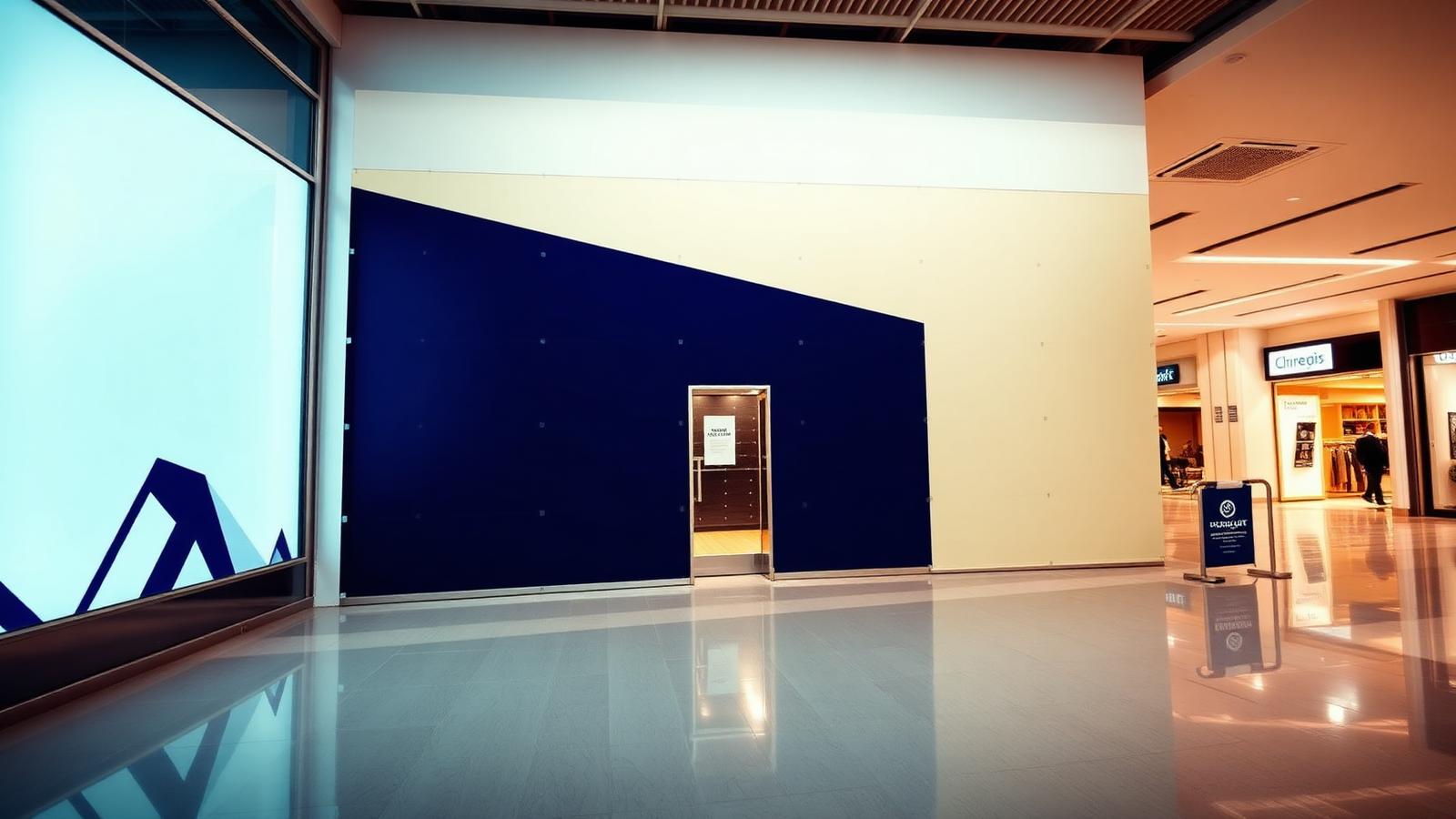
A store renovation is one of the most disruptive events in a retail calendar. The fit-out crew is in, the storefront is closed, and for weeks — sometimes months — your brand is replaced by raw plywood or generic contractor barriers. That gap in brand presence costs more than most teams account for. The fix is well-executed hoarding graphics, but getting them right during a renovation is harder than it looks.
Most brand visibility failures during a fit-out are not caused by budget or intent. They are caused by late starts, fragmented vendors, and artwork that was never adapted for a construction barrier. This article covers what actually needs to happen to keep your brand visible and credible from day one of the fit-out.
Why Renovations Are a Harder Brief Than New Openings
A new store opening has a clean slate. The hoarding goes up before the fit-out begins, and the creative brief is usually built around a launch message.
A renovation is messier. The store is known. Shoppers already have an expectation of it. The hoarding has to do two things at once: acknowledge the disruption and reinforce that the brand is still there. The wrong creative choice makes the store look permanently closed. The right one keeps foot traffic engaged and gives the brand something to say during the downtime.
There is also a practical complication. Renovation hoardings often go up in phases, come down in sections, or need to accommodate temporary access doors for contractors. That affects panel layout, artwork placement, and where you can and cannot position a headline or logo.
The failure mode here is treating a renovation hoarding like a standard print job. The physical constraints are different, the creative brief is different, and the access coordination with mall ops is different.
What the Hoarding Has to Communicate
During a fit-out, the hoarding is your only customer-facing surface. It needs to work harder than a standard retail display because it is carrying the entire brand impression for the duration of the renovation.
Confirm the Brand Is Still There
The first job is presence. Shoppers who see a shuttered storefront with no branding will assume the tenant has left. A clearly branded hoarding — your logo, colour palette, and tone — removes that ambiguity immediately.
This sounds obvious. It is frequently skipped or underexecuted when teams are focused on the fit-out itself and treat the hoarding as an afterthought.
Give Shoppers a Reason to Return
A renovation is an opportunity to build anticipation. "Coming soon" messaging, a reopening date, or a campaign teaser all give passing shoppers a reason to come back. Even a simple "We'll be back, better than ever" with a date performs better than a blank-branded wall.
What this means practically: the creative brief for a renovation hoarding should include a message strategy, not just brand assets. If your team does not have one ready, a vendor who works with existing files and adapts them to hoarding layouts can bridge that gap.
Maintain Brand Standards Under Construction Conditions
Construction environments are not kind to printed materials. Dust, moisture, contractor foot traffic, and contact with equipment all affect how graphics hold up. Print specification matters. Material choice matters. A vinyl substrate that performs fine in a clean retail environment may not survive eight weeks of active fit-out conditions.
Print spec and material selection are not decorative decisions. They are operational ones, and they need to be confirmed before production begins — not after the first panel is damaged.
The Practical Sequence for a Renovation Hoarding Install
Getting the hoarding up on time requires starting earlier than most teams expect.
1. Site Survey Before Artwork
The physical dimensions of a renovation hoarding are almost never what the drawings say. Stud placement, existing utility runs, access door requirements, and the contractor's framing decisions all affect the final panel layout.
A site survey before artwork production is not optional. Mall ops will not approve artwork that does not match the actual structure. If the artwork is produced first and the dimensions are wrong, you are reprinting panels at your own cost and on your own schedule risk.
The survey should capture exact panel dimensions, the location of any access doors or vents, the height from floor to top rail, and any landlord-specific requirements for panel breaks or graphic zones.
2. Artwork Adapted to the Hoarding Layout
Brand files designed for standard retail formats do not drop cleanly onto a construction hoarding. A logo that reads well on a 3-foot storefront sign will not scale the same way across a 60-foot hoarding wall. Panel breaks interrupt images. Access doors cut through headlines.
The artwork has to be adapted to the physical reality of the hoarding — not the other way around. That means knowing where the panel breaks fall before the layout is finalised, and designing around them rather than hoping they land somewhere neutral.
If your team is supplying existing brand files, a vendor who understands hoarding layouts will adapt them to the structure. If you are starting from scratch, the layout should be built from the survey dimensions outward.
3. Mall Ops Coordination and Access Scheduling
Installing hoarding graphics in a mall during a renovation requires coordination with mall operations and security. This is not a step you can hand off to the fit-out contractor. It requires a separate access request, a Certificate of Insurance specific to the graphics install, and scheduling that does not conflict with trading hours or other tenant activity in the corridor.
Most installs are scheduled outside trading hours: early morning, late evening, or overnight. The window is fixed. If the graphics are not ready when the access window opens, the install does not happen that day. Rescheduling costs time you likely do not have.
The failure mode here is assuming the fit-out contractor will handle mall ops access for the graphics install. They will not. That coordination is the graphics vendor's responsibility — and if your vendor does not have experience with it, you will find out at the worst possible time.
4. Photo Documentation on Completion
Once the hoarding is installed, get photo documentation before the access window closes. It confirms the install meets brand standards and landlord requirements, and it gives your marketing team usable content for the renovation announcement or social posts.
For mall marketing directors managing multiple tenant transitions, photo proof on completion is also the record that the work was done to spec — without requiring a site visit.
Common Points of Failure During Renovation Projects
Starting the Graphics Brief Too Late
The renovation timeline is set by the fit-out schedule. The hoarding graphics timeline is separate, and it starts earlier than most teams plan for. If you are waiting until the hoarding structure is framed before briefing the graphics vendor, you are already behind.
A 3 to 5 business day lead time from site survey to completed installation is achievable with a full-service vendor. But the clock starts when the survey happens, not when you make the first call. Build that window into your fit-out schedule from the beginning.
Using a Generalist Printer
A generalist large-format printer can produce the panels. What they cannot do is survey the site, adapt the artwork to the hoarding layout, coordinate with mall ops, and install the graphics outside trading hours. Each of those steps requires a separate vendor relationship, a separate schedule, and a separate point of failure.
For a renovation project with a fixed reopening date, fragmented vendors are a significant risk. One missed deadline in the chain affects everything downstream.
Ignoring the Landlord's Graphic Standards
Most major mall landlords — including Cadillac Fairview, Oxford Properties, and Ivanhoé Cambridge — have specific requirements for hoarding graphics. These cover minimum resolution, approved materials, graphic zone restrictions, and content guidelines. Artwork that does not meet those standards triggers a revision cycle that can add days or weeks to the timeline.
Know the landlord's requirements before artwork production begins. A vendor with experience across multiple landlord portfolios will have them on file.
What a Well-Executed Renovation Hoarding Looks Like
A renovation hoarding that works does not look like a construction site. It looks like a brand that is doing something intentional.
The graphics are sharp, the brand palette is accurate, and the messaging gives passing shoppers a clear signal that the store is coming back. Panel breaks are invisible because they were designed around. The access door, if there is one, is integrated into the layout rather than cutting through a headline.
That outcome requires a vendor who treats the hoarding as a brand surface, not a print job. It also requires starting early enough that the artwork can be adapted properly and the install can be scheduled without rushing.
For a closer look at how renovation and relocation briefs differ in practice, the hoarding graphics for renovations vs. relocations breakdown covers what changes between the two and what stays consistent.
If you are new to how construction hoardings work in a mall context, the plain-language guide to retail hoarding covers the fundamentals without assuming prior knowledge.
Choosing who installs the panels matters as much as the artwork — our rundown of the best branded hoarding installation services for retail renovations covers what to check before you book a crew.
Pricing and Timeline for Renovation Hoardings
Most renovation hoardings are priced at approximately $6 per square foot, inclusive of print and standard installation. That figure covers the survey, artwork adaptation, production, and the install. Final pricing is confirmed after reviewing site photos and drawings — renovation hoardings vary more in scope than new openings.
Rush options are available for tighter timelines. The standard lead time is 3 to 5 business days from first contact.
An instant estimate is available at rapidretailgraphics.com without a call. If your project has specific constraints, sharing site details upfront will get you a more accurate number faster.
For reference, the 48-hour turnaround case study shows what is achievable when the timeline is compressed and the brief is clear.
FAQs
A renovation is not a pause in your brand's presence. For the duration of the fit-out, the hoarding is the only customer-facing surface that location has. Treating it as a print job rather than a brand deployment is the most common mistake — and it shows. Get the survey done early, adapt the artwork to the actual structure, and coordinate the install properly. The result is a hoarding that holds the brand's position through the entire fit-out, not just the first week.
Get a quote at rapidretailgraphics.com.
Have a hoarding project coming up?
Get a Quote